


Liposuction seems "simple" compared to major surgeries. Your surgeon made tiny incisions, removed fat, and you were home the same day. But here's what they might not have emphasized enough: The quality of your final results depends almost entirely on the compression you wear during the next 8-12 weeks.
Not "mostly" on compression. Not "partially." Almost entirely.
Your surgeon removed fat and disrupted tissue. What determines whether you get smooth, sculpted contours or lumpy, irregular results? The faja you wear and HOW you wear it.
Wrong compression = fluid accumulation, poor skin adherence, lumps, irregularities, and disappointing results despite perfect surgical technique.
Right compression = smooth skin adherence, controlled inflammation, no seromas, and the sculpted body you invested in.
This is your complete lipo faja protocol: which areas need what compression, Stage 1 through Stage 3 explained, the mistakes that create lumps, and exactly which fajas work for which lipo zones.
Your smooth results start here.
Understanding What Liposuction Did to Your Body
Before discussing fajas, understand what happened during your procedure and why compression is so critical:
The Liposuction Process
Step 1: Tumescent Fluid Injection
Your surgeon injected saline + lidocaine + epinephrine into fat areas. This fluid:
- Numbed the area
- Constricted blood vessels (reduced bleeding)
- Expanded fat cells (made removal easier)
- Created separation between fat and other tissues
Step 2: Cannula Insertion
Through tiny incisions (3-5mm), hollow tubes (cannulas) were inserted into fat layers.
Step 3: Mechanical Fat Removal
The cannula moved back and forth, mechanically dislodging and vacuuming fat cells. This created:
- Tunnels throughout fat layers
- Disruption of connective tissue
- Blood vessel trauma (controlled but significant)
- Lymphatic channel damage
- Large "empty space" where fat was removed
Step 4: Closure
Incisions left open (drain naturally) or closed with minimal sutures.
The Healing Challenge This Creates
Massive "Dead Space":
Where fat existed, there's now empty space. Without compression, this fills with:
- Blood (from disrupted vessels)
- Lymph fluid (from damaged channels)
- Inflammatory exudate
- Eventually forms seroma (fluid pocket) if not controlled
Disrupted Tissue Architecture:
The tunnels and trauma disrupted normal tissue layers. Your skin needs to re-adhere to underlying muscle/fascia in new position (closer, without the fat layer).
Inflammation Response:
Your body treats lipo as massive trauma, triggering enormous inflammatory response. This swelling can last 3-6 months without proper management.
Scar Tissue Formation:
As tunnels heal, your body forms scar tissue. Controlled compression guides this formation smoothly. Uncontrolled = irregular, lumpy scar tissue.
Your faja's job: Collapse dead space, guide smooth skin adherence, control inflammation, prevent fluid accumulation, and direct scar tissue formation for smooth results.
Compression Requirements by Lipo Area
Different body areas have different compression needs:
Abdomen (Most Common Area)
Challenges:
- Largest surface area
- Most skin laxity
- Highest fluid accumulation risk
- Most visible, so irregularities are obvious
Compression Needed:
- 30-40 mmHg Stage 1 (weeks 1-2)
- 25-35 mmHg Stage 2 (weeks 2-8)
- 20-30 mmHg Stage 3 (weeks 8-16+)
Critical Features:
- Wide, tall panel covering entire abdomen
- Reinforced center (where most lipo occurs)
- Extends low enough to cover pubic area
- Extends high enough to cover upper abdomen
Best Faja:
Stage 2 Lipo Abdominal Focus - Comprehensive abdominal compression.
Flanks/Love Handles (Very Common)
Challenges:
- Stubborn post-lipo swelling (worst of any area)
- Prone to irregularities
- Often forgotten in compression planning
- Critical for waist definition
Compression Needed:
- 32-40 mmHg Stage 1 & 2 (higher than most areas)
- Extended Stage 2 often beneficial (10-12 weeks)
- Foam boards particularly effective here
Critical Features:
- High compression specifically targeting side body
- Wide enough to cover entire flank area
- High-back design that wraps around
Best Faja:
High-Back Stage 2 with Flank Focus- Specialized flank compression.
Back (Upper and Lower)
Challenges:
- Difficult to compress effectively (curved surface)
- Bra straps can interfere with compression
- Often develops persistent swelling if under-compressed
- Creates "back rolls" if irregular
Compression Needed:
- 28-35 mmHg throughout stages
- Must extend high enough for upper back lipo
- Must provide lumbar support for lower back
Critical Features:
- High-back panel to bra line
- Smooth, continuous compression (no gaps)
- Reinforced lumbar area
- Comfortable for sleeping (back lipo patients often sleep on back)
Best Faja:
Full-Body with High Back - Complete back coverage.
Arms (Increasingly Popular)
Challenges:
- Difficult to keep compression in place (arms move constantly)
- Skin laxity if significant fat removed
- Swelling can be dramatic and visible
- Limited specialized products available
Compression Needed:
- 25-30 mmHg (gentler than torso; too much restricts movement)
- Graduated compression (tighter at top, easing toward elbow)
- Must stay in place during movement
Critical Features:
- Arm sleeves integrated or separate
- Silicone grip strips preventing sliding
- Breathable (arms overheat in non-breathable compression)
Best Faja:
Full-Body with Arm Sleeves - Only full-body option with integrated arm compression.
Thighs (Inner and Outer)
Challenges:
- Constant friction during walking
- Difficult to keep compression positioned
- Prone to chafing if not seamless
- Inner thigh especially prone to swelling
Compression Needed:
- 25-32 mmHg
- Must extend to knee for best results
- Graduated compression (tighter at top)
Critical Features:
- Long-leg design to knee
- Silicone strips at hem (prevents rolling)
- Seamless construction (prevents chafing)
- Anti-chafing material
Best Faja:
Long-Leg Stage 2 - Complete thigh compression.
360 Lipo (Combination of Areas)
What It Includes:
Abdomen + flanks + back = circumferential torso lipo
Challenges:
- Multiple areas need simultaneous compression
- Different areas swell at different rates
- Requires comprehensive garment
Compression Needed:
- Varies by zone (30-40 mmHg abdomen, 32-40 mmHg flanks, 28-35 mmHg back)
- Single garment must provide differentiated compression
Best Faja:
360 Stage 2 Comprehensive - Engineered for complete circumferential compression.
Stage-by-Stage Lipo Recovery Protocol
Stage 1: Immediate Post-Op (Days 1-14)
What's Happening:
- Acute inflammation at maximum
- Tumescent fluid draining from incisions
- Blood and lymph leaking into tissues
- Massive swelling (you look larger than pre-lipo initially)
- Bruising spreading and intensifying
- Pain significant (6-8/10)
- Cannot see any results yet
Compression Requirements:
- Stage 1 faja: 30-40 mmHg
- Worn 24 hours (only removed for showering if cleared)
- May have drains (remove faja carefully for drain management)
- Possible surgical dressing underneath faja
- ABD pads over leaking incisions
Physical State:
- Very limited mobility (moving is painful)
- Significant fatigue
- Cannot exercise
- Light walking only
- Sleeping difficult
Faja Features Needed:
- Maximum compression for dead space collapse
- Easy bathroom access (you're weak and slow)
- Drain-compatible if applicable
- Medical-grade for 24-hour wear against healing skin
- Adjustable (you're maximally swollen)
Stage 1 Product:
Lipo Stage 1 Full Body - Maximum immediate post-op compression.
Critical Mistakes to Avoid:
- ❌ Removing faja for "breaks" (fluid reaccumulates immediately)
- ❌ Wearing faja too loose (ineffective compression)
- ❌ Not having backup faja (you need to wash it)
- ❌ Expecting to see results (you won't for weeks)
Stage 2: Active Healing (Weeks 2-8)
What's Happening:
- Week 2-3: Acute inflammation reducing, incisions healing, drains removed (if you had them), first glimpses of results under remaining swelling
- Week 4-5: Significant swelling reduction, results becoming visible, energy improving dramatically, can return to light activities
- Week 6-8: Swelling mostly resolved, skin adhering to new contours, results look consistently good, preparing for Stage 3 transition
Compression Requirements:
- Stage 2 faja: 25-35 mmHg
- 23 hours daily (1 hour for showering/washing faja)
- Adjust hooks weekly as swelling reduces
- Add foam boards to target irregular areas
- Begin lymphatic massage (weeks 2-3 onward)
Physical State:
- Weeks 2-4: Moderate activity, can work (desk job), walking for exercise
- Weeks 4-6: Increasing activity, light gym cleared, life feeling more normal
- Weeks 6-8: Near-normal activity, moderate exercise cleared, compression feels routine
Faja Features Needed:
- Firm but breathable (wearing 23h daily for 6-8 weeks)
- Multiple adjustment rows (you'll shrink 2-4 inches during this phase)
- High-quality construction (cheaper fajas lose compression by week 4)
- Area-specific compression matching your lipo zones
- Foam board compatible for problem areas
Stage 2 Products by Lipo Type:
Abdominal Lipo:
Stage 2 Abdominal Focus
Arms + Torso:
Full Body with Arms
Critical Mistakes to Avoid:
- ❌ Reducing wear time too early (minimum 23h through week 6)
- ❌ Not adjusting tighter as you slim (loose faja = inadequate compression)
- ❌ Skipping foam boards on lumpy areas (they make dramatic difference)
- ❌ Returning to gym too aggressively (inflammation rebounds)
- ❌ Switching to Stage 3 before surgeon clears you
Stage 3: Refinement (Weeks 8-16+)
What's Happening:
- Major healing complete (90% healed)
- Skin fully adhered to underlying structures
- Minor residual swelling (fluctuates with activity, hormones, sodium)
- Results look consistently good
- Body tolerating normal activities
- Can exercise fully
Compression Requirements:
- Stage 3 faja: 20-30 mmHg
- 16-20 hours daily initially (can reduce to 12-16 if approved)
- Less restrictive but still supportive
- Continue targeting any remaining problem areas
- Lymphatic massage as needed
Physical State:
- Life completely normal
- Full exercise cleared
- Can see final results emerging
- Confidence high
Faja Features Needed:
- Comfortable for all-day wear including work
- Often seamless/invisible under clothing
- Less clinical aesthetic (more lifestyle-friendly)
- Still provides meaningful compression (not just shapewear)
Stage 3 Product:
Lipo Stage 3 Strapless - Refined compression for weeks 8-16+.
When to Transition:
- Minimum 6-8 weeks post-lipo
- Swelling minimal and consistent day-to-day
- Tissues feel firm (not soft/squishy)
- Stage 2 feels loose even with hooks tightened
- Surgeon approval
Gradual Transition Protocol:
- Days 1-3: Stage 3 during day, Stage 2 at night
- Days 4-7: Stage 3 day and night, keep Stage 2 backup
- Day 8+: Full-time Stage 3
Critical Mistakes to Avoid:
- ❌ Skipping Stage 3 entirely (abrupt transition causes rebound swelling)
- ❌ Thinking you're "done" at 8 weeks (you need 4-6 months for final results)
- ❌ Switching back to regular clothes without compression (results can regress)
Foam Boards: The Secret to Smooth Results
What They Are: Medical-grade foam sheets placed over lipo areas under your faja for focused, rigid compression.
Why They're Critical for Lipo
Prevent Irregularities:
Lipo creates uneven tunnels. Without focused pressure, these heal irregularly (lumps, divots, waves). Foam boards create uniform pressure preventing this.
Break Up Fibrosis:
Scar tissue (fibrosis) forms during healing. Early hard lumps can be softened with foam board pressure combined with massage.
Accelerate Smooth Adherence:
Skin needs to stick smoothly to underlying muscle. Foam boards press skin down uniformly, promoting even adherence.
Target Problem Areas:
Even with good overall compression, specific spots can develop issues. Foam boards let you target these precisely.
How to Use Effectively
Timing: Introduce week 2-4 (after acute inflammation reduces but while skin is still adhering).
Placement:
- Identify lumpy, irregular, or problem areas
- Cut foam to size slightly larger than problem zone
- Place foam against skin over problem area
- Put Stage 2 faja over foam (faja holds foam in place)
Wear Time: 20-23 hours daily for 4-8 weeks (or until area smooths).
Progression: Start with soft foam, progress to firmer foam/plastic boards as tolerated.
Best Areas:
- Abdominal irregularities
- Flank lumps
- Inner thigh bumps
- Upper back ridges
- Any area that feels hard or uneven
Product:
Lipo Foam 3-Pack - $20-35 for set you cut to size.
Real Results: Studies show patients using foam boards have 40-60% fewer irregularities at 6 months compared to compression alone.
Lymphatic Massage: Accelerating Your Results
Stage 2 faja + lymphatic massage = optimal lipo results.
What It Does
Moves Trapped Fluid: Post-lipo fluid gets trapped in tissues. Massage manually moves it toward lymph nodes for elimination.
Breaks Up Fibrosis: Early scar tissue (feels like hard lumps) can be broken up with aggressive massage during healing window.
Improves Circulation: Better blood flow = faster healing, reduced inflammation.
Prevents Seroma: By moving fluid consistently, you prevent it from pocketing into seromas.
Accelerates Final Results: Can reduce total healing time by 4-8 weeks.
Protocol
Frequency:
- Weeks 2-4: 3-5x weekly (professional MLD if possible)
- Weeks 4-8: 2-3x weekly
- Weeks 8-12: 1-2x weekly or as needed
Timing with Faja:
Remove faja for massage session (30-60 min). IMMEDIATELY put faja back on after. Post-massage compression locks in benefits.
Technique:
- Gentle, rhythmic strokes toward lymph nodes
- NOT deep tissue (that damages healing tissue)
- Focus on swollen/hard areas
- Combine with foam board use
DIY Option:
Lymphatic Drainage Massager - $25-40 professional-quality at-home tool.
Professional vs DIY: Professional MLD is ideal but expensive (800-3000). DIY with proper tool is 80% as effective at 5% the cost.
Common Lipo Complications Your Faja Prevents
Complication #1: Seroma Formation
What It Is: Fluid accumulation creating pockets under skin (feels squishy, looks swollen).
Incidence: 15-30% of lipo patients without proper compression. <5% with proper Stage 2 faja protocol.
Prevention: Consistent 23-hour compression collapses dead space where fluid would accumulate.
If It Develops: Surgeon drains with needle; continue aggressive compression to prevent refilling.
Complication #2: Skin Irregularities
What It Is: Lumps, bumps, waves, divots, or uneven texture in lipo areas.
Cause: Poor skin adherence, uneven scar tissue formation, inadequate compression.
Prevention:
- Proper Stage 2 faja (firm, even compression)
- Foam boards over developing irregularities
- Lymphatic massage breaking up early fibrosis
- Extended Stage 2 if needed (10-12 weeks)
If It Develops: Aggressive massage + foam boards + potentially extended compression. Some irregularities require revision lipo.
Complication #3: Skin Laxity/Sagging
What It Is: Loose, hanging skin where fat was removed (different from irregularities).
Risk Factors: Large volume lipo, poor skin elasticity, age 40+, smoking.
Prevention: Compression helps skin contract and adhere, but can't prevent all laxity if skin elasticity is poor.
If Significant: May require skin removal surgery (tummy tuck, arm lift, thigh lift). Compression optimizes but can't fix poor skin quality.
Complication #4: Asymmetry
What It Is: One side looks different than other (size, shape, contour).
Cause: Uneven fat removal (surgical) OR uneven healing (compression-related).
Prevention: Ensure faja provides symmetric compression. Check that hooks are same tightness both sides.
If It Develops: Usually improves by 6 months. If persistent, may need revision.
Choosing Your Lipo Fajas: Decision Guide
Step 1: Identify ALL Your Lipo Areas
List every area your surgeon treated:
- ☐ Abdomen (upper, lower, or both)
- ☐ Flanks (love handles)
- ☐ Back (lower, upper, or both)
- ☐ Arms
- ☐ Thighs (inner, outer, or both)
- ☐ Other: ___________
Your faja must compress EVERY area treated. Forgetting an area = poor results there.
Step 2: Select Faja Style by Area Coverage
Abdominal Only:
Abdominal Focus Faja - Targeted compression without excess coverage.
360 (Abdomen + Flanks + Back):
360 Full Coverage - Comprehensive torso compression.
Upper Body (360 + Arms/Back):
Full Body with Arms - Maximum coverage.
Step 3: Quantity Needed
Minimum: 3 fajas total
- 1 Stage 1
- 2 Stage 2 (one wearing, one washing)
Recommended: 5 fajas
- 1 Stage 1
- 3 Stage 2 (primary, backup, seamless for work)
- 1 Stage 3
Budget:
- Minimum: $250-350
- Recommended: $400-550
Step 4: Size Selection
For Stage 1 & Early Stage 2 (Weeks 1-3):
If between sizes, SIZE UP. You're maximally swollen. Too tight = unbearable.
For Later Stage 2 (Weeks 4-8):
Tighten hooks as you slim. May need to size down around week 4-6.
Measure Accurately:
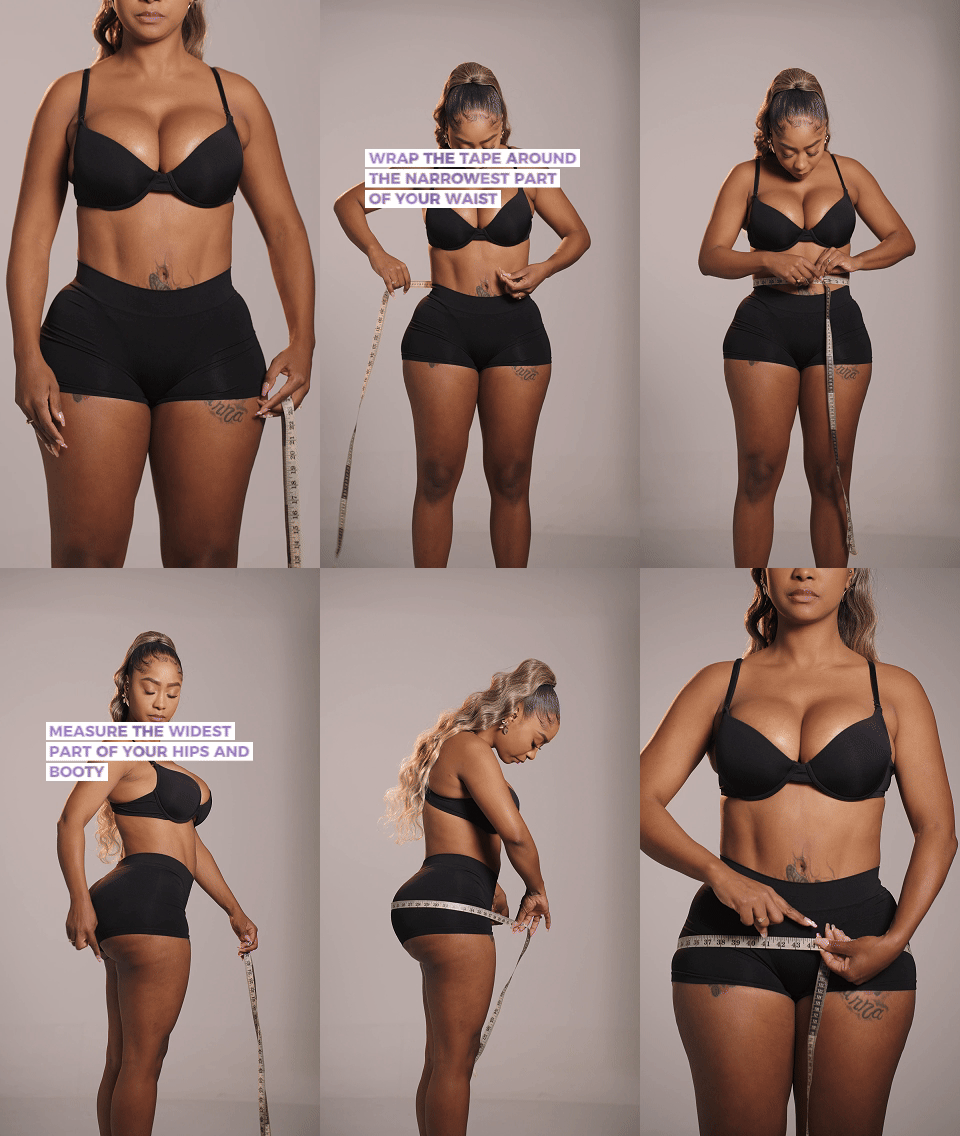
Use Snatched Body Size Chart and measure at:
- Bust (fullest part)
- Waist (natural waist)
- Hips (fullest part)
Your Complete Lipo Faja Shopping List
Essential Purchases (Cannot Skip)
✅ Stage 1 Faja (Days 1-14) - $100-150
Lipo Stage 1
✅ Primary Stage 2 Faja (Weeks 2-8) - $98-145
Choose based on lipo areas (see Step 2 above)
✅ Backup Stage 2 Faja (Washing Rotation) - $98-145
✅ Lipo Foam Boards (Weeks 2-12) - $20-35
3-Pack Foam
Essential Total: $316-475
Recommended Additions
✅ Lymphatic Massager - $25-40
✅ Stage 3 Faja (Buy Ahead) - $70-120
Stage 3 Lipo
✅ Seamless Stage 2 (Weeks 4-8, Work) - $125-145
Recommended Total: $536-780
Optional Enhancement
✅ Second foam board set (extra for multiple areas)
✅ Arnica supplements (reduce bruising)
✅ Compression socks (prevent blood clots if multiple areas)
Common Lipo Faja Mistakes
Mistake #1: Buying Generic Compression, Not Medical-Grade
Problem: Amazon "compression shapewear" isn't medical-grade. Loses compression within weeks, provides inadequate pressure, often has seams that irritate incisions.
Solution: Buy Colombian medical-grade fajas engineered for post-lipo.
Mistake #2: Only Compressing Some Lipo Areas
Problem: "I'll just compress my abdomen, my flanks don't seem swollen."
Reality: Every lipo area needs compression. Undertreated areas develop worse results.
Solution: Comprehensive faja covering ALL lipo zones.
Mistake #3: Wearing Faja Too Loose
Problem: "It's more comfortable loose." Yes, but ineffective.
Reality: Proper compression should feel FIRM (not painful, but definitely snug).
Solution: If you can easily fit hand under faja, it's too loose. Tighten hooks.
Mistake #4: Stopping Compression Too Early
Problem: "I look good at week 5, I'm done."
Reality: Skin is still adhering through week 8-12. Early discontinuation risks rebound swelling and lost definition.
Solution: Minimum 6-8 weeks Stage 2, then transition to Stage 3 (don't stop abruptly).
Mistake #5: Not Using Foam Boards
Problem: "My faja is enough."
Reality: Faja provides general compression. Foam boards provide FOCUSED compression on problem areas.
Solution: Use foam boards on any area that feels lumpy/irregular starting week 2-4.
Frequently Asked Questions
How long do I need to wear compression after lipo?
Stage 1: 1-2 weeks, 24 hours daily
Stage 2: 6-8 weeks, 23 hours daily (minimum)
Stage 3: 8-16 weeks, 16-20 hours daily
Total: 16-26 weeks of some compression for optimal results
Some surgeons recommend 6 months+ for extensive lipo.
Can I go to gym during Stage 2?
Weeks 2-4: Light walking only
Weeks 4-6: Light gym (walking, light weights) with faja
Weeks 6-8: Moderate exercise with faja
Week 8+: Full exercise cleared (usually)
Never exercise without faja during weeks 2-8.
Will my results be ruined if I skip compression for a day?
One day won't "ruin" results, but you'll experience rebound swelling that sets you back several days. Consistency is key. If you must skip (rare emergency), resume immediately.
My lipo areas are still swollen at 3 months. Is something wrong?
Residual swelling lasting 3-6 months is normal, especially for extensive lipo or areas like flanks. Continue Stage 3 compression and lymphatic massage. If concern, consult surgeon.
Can I wear regular shapewear instead of medical faja?
No. Regular shapewear provides 5-15 mmHg compression (vs 25-40 mmHg medical). It's inadequate for post-lipo healing. Use proper medical-grade fajas.
Your Lipo Success Timeline
Week 2: First glimpse of results under swelling
Week 4: Significant visible improvement
Week 6: Looking consistently good
Week 8: Most swelling resolved
Month 3: 80% of final results visible
Month 6: 95% of final results
Month 12: Final results, all swelling completely resolved
The patients with the smoothest, most dramatic lipo results at 1 year are those who wore proper fajas religiously through each stage.
The Bottom Line: Compression Determines Your Results
Your surgeon removed fat perfectly. What determines if you get smooth, sculpted results or lumpy, irregular results? YOU. Your faja choices. Your adherence to protocol.
Liposuction is only 50% the surgery. The other 50% is your compression protocol during healing.
Invest in proper fajas. Wear them religiously. Use foam boards on problem areas. Get lymphatic massage. Be patient.
Your sculpted body is healing. Give it exactly what it needs.
👉 Shop All Lipo Fajas by Stage
You invested in lipo. Now protect that investment with proper compression. Every. Single. Day.