


You've heard the word "faja" everywhere lately. Your friend swears by hers post-surgery. Influencers rave about their snatched waists. Your surgeon mentioned you'll need one. But when you google it, you get confusing results mixing medical compression, shapewear, waist trainers, and post-op garments.
So what exactly IS a faja?
Simple answer: A faja is a Colombian compression garment—but that barely scratches the surface of what makes fajas different from regular shapewear and why they've become the gold standard for post-surgical recovery and body shaping worldwide.
I'm giving you the complete beginner's guide:
- What "faja" actually means and where it comes from
- How Colombian fajas differ from regular shapewear
- The different types and their specific uses
- How they actually work (the science)
- Who uses them and why
- How to choose your first faja
- Common myths debunked
By the end, you'll understand exactly what fajas are, whether you need one, and how to navigate the faja world confidently.
What Does "Faja" Actually Mean?
The Literal Translation
Faja (pronounced FAH-ha) is Spanish for:
- Belt
- Girdle
- Sash
- Band
In Colombian Spanish specifically, "faja" refers to compression garments designed to shape, support, or aid recovery.
The Cultural Context
In Colombia, fajas aren't niche medical devices or occasional shapewear. They're mainstream wellness tools that women (and men) use routinely for:
- Post-surgical recovery
- Post-pregnancy recovery
- Daily body shaping
- Waist training
- Posture support
- Confidence enhancement
Wearing a faja in Colombia is as normal as wearing a sports bra in the US. It's not taboo, secretive, or unusual—it's practical self-care.
The Colombian Origin Story: Why Colombia?
Colombia's Plastic Surgery Leadership
The Facts:
- Colombia performs more plastic surgeries per capita than almost any country
- Medellín and Bogotá are global plastic surgery destinations
- Colombian plastic surgeons pioneered techniques (including BBL methodology)
- Hundreds of thousands of surgeries annually
The Result:
With this surgical volume came massive demand for post-operative compression. Colombian manufacturers spent decades perfecting compression garments specifically for surgical recovery.
The Engineering Evolution
1980s-1990s: Basic compression garments, primarily medical focus
2000s: Engineering advances—targeted compression zones, better materials, procedure-specific designs
2010s: Aesthetic improvements—seamless construction, fashion-forward designs, lifestyle integration
2020s: Global recognition—Colombian fajas became gold standard worldwide, "Snatched Body" culture popularized them
Colombian fajas evolved from medical necessity into engineered excellence.
How Fajas Differ from Regular Shapewear
The Fundamental Differences
| Feature | Regular Shapewear | Colombian Fajas |
|---|---|---|
| Primary Purpose | Smooth appearance under clothes | Medical recovery OR shaping |
| Compression Level | 5-15 mmHg (light) | 15-40 mmHg (medical-grade) |
| Construction | Single-layer elastic | Multi-layer engineered compression |
| Boning | None or minimal | 6-12 flexible/steel stays |
| Design Intent | Generic body types | Procedure/body-specific |
| Durability | 50-100 wears | 200-500 wears |
| Medical Grade | No | Yes (in Stages 1-3) |
| Price | $20-60 | $70-165 |
Why the Difference Matters
Regular Shapewear:
"I want to look smoother in this dress tonight."
Colombian Fajas:
"I need medical-grade compression to optimize my $12,000 surgery results" OR "I want to train my waist 3 inches smaller over 6 months."
Different tools for different goals.
The Types of Fajas: Understanding the Categories
Category 1: Post-Surgical Fajas (Stage 1, 2, 3)
Purpose: Medical recovery after plastic surgery
Stage 1 (Days 1-14):
- Maximum compression (30-40 mmHg)
- Drain-compatible
- Accommodates maximum swelling
- 24-hour wear
Stage 2 (Weeks 2-8):
- High compression (25-35 mmHg)
- Adjustable for changing body
- 23-hour daily wear
- Active healing support
Stage 3 (Weeks 8-16+):
- Moderate compression (20-30 mmHg)
- More comfortable
- 16-20 hour daily wear
- Refinement phase
Who Uses: Anyone recovering from liposuction, BBL, tummy tuck, or other body contouring surgery.
Products: Stage 2 BBL Faja, Stage 3 Recovery
Category 2: Waist Training Fajas (Stage 4)
Purpose: Gradually reduce waist size, create hourglass figure
Features:
- Moderate compression (15-25 mmHg)
- 9-12 steel/flexible bones
- Multiple adjustment rows
- Designed for 8-10 hour daily wear
Timeline: 6-12 months of consistent use for permanent 2-4 inch waist reduction
Who Uses: Women wanting permanent waist reduction, hourglass figure enhancement, or posture improvement.
Products: Stage 4 Waist Cincher
Category 3: Daily Wear / Lifestyle Fajas
Purpose: Everyday shaping, confidence boost, smooth silhouette
Features:
- Light-moderate compression (15-22 mmHg)
- Comfortable for extended wear
- Seamless options
- Fashion-forward designs
Who Uses: Anyone wanting daily body confidence, smooth appearance under clothes, or light support.
Products: Seamless Daily Faja
Category 4: Specialty Fajas
Purpose: Specific needs (strapless, backless, shorts, etc.)
Examples:
- Strapless (for off-shoulder outfits)
- BBL-specific (open-butt design)
- Thigh-focused (for thigh lipo)
- High-back (for back support)
Who Uses: People with specific aesthetic or recovery needs.
How Fajas Actually Work: The Science
The Compression Mechanism
What Compression Does:
1. Mechanical Pressure
Faja applies consistent pressure (measured in mmHg—same unit as blood pressure) against skin and underlying tissues.
2. Fluid Management
Compression collapses empty spaces (from surgery or natural gaps), preventing fluid accumulation and promoting drainage.
3. Tissue Support
Acts as external scaffold, supporting tissues during healing or training.
4. Proprioceptive Feedback
Your body feels the compression, triggering postural adjustments and core engagement.
For Post-Surgery Recovery
Immediate Effects (Days 1-14):
- Controls acute inflammation
- Prevents seroma/hematoma
- Supports weakened tissues
- Reduces pain through stability
Medium-Term (Weeks 2-8):
- Guides skin adherence to new contours
- Promotes smooth healing
- Prevents irregularities
- Accelerates swelling resolution
Long-Term (Weeks 8+):
- Refines final results
- Maintains achieved shape
- Supports tissue maturation
For Waist Training
Progressive Adaptation:
- Compression trains floating ribs inward (2-3 degrees over months)
- Core muscles adapt to contracted position
- Soft tissue redistributes away from compressed area
- Posture improvement enhances natural curves
Result: 2-4 inches permanent waist reduction over 6-12 months with consistent use.
Who Uses Fajas and Why?
Post-Surgery Recovery Patients
Procedures:
- BBL (Brazilian Butt Lift)
- Liposuction
- Tummy Tuck
- Mommy Makeover
- Body contouring
Why: Medical necessity. Fajas optimize surgical results, prevent complications, and accelerate healing.
Duration: 12-24 weeks depending on procedure
New Mothers (Post-Pregnancy)
Timeline: 6+ weeks postpartum (with doctor clearance)
Why: Help restore pre-pregnancy waist, support weakened core, improve posture, aid diastasis recti recovery.
Approach: Start gentle (Stage 3-4 compression), gradually progress over months.
Waist Training Enthusiasts
Goal: Permanent waist reduction, hourglass figure
Why: Achieve 2-4 inch smaller waist through consistent training over 6-12 months.
Commitment: 8-10 hours daily wear, progressive tightening.
Daily Wear / Confidence Seekers
Why:
- Smooth silhouette under clothes
- Posture support (reduces back pain)
- Confidence boost
- Professional appearance
- Special occasions
Approach: Lifestyle fajas (comfortable, seamless, moderate compression).
Fitness / Body-Conscious Individuals
Why:
- Enhance gym results appearance
- Thermal activation during workouts
- Support during weight loss journey
- Maintain results after achieving goals
Approach: Workout-specific fajas or daily wear fajas.
How to Choose Your First Faja: Beginner's Framework
Step 1: Identify Your Primary Goal
Post-Surgery Recovery?
→ You need medical-grade Stage 1/2/3 fajas
→ Follow your surgeon's specific recommendations
→ Start Here: Stage 2 Options
Waist Training?
→ You need Stage 4 waist cincher with boning
→ Expect 6-12 month commitment
→ Start Here: Waist Cinchers
Daily Wear / Confidence?
→ You need lifestyle faja with moderate compression
→ Prioritize comfort and invisibility
→ Start Here: Seamless Options
Special Occasion?
→ You need targeted style (strapless, shorts, etc.)
→ Consider specific outfit requirements
→ Start Here: Strapless Collection
Step 2: Understand Compression Levels
40-30 mmHg (Maximum):
Medical-grade, post-surgery immediate phase. Very firm.
30-25 mmHg (High):
Post-surgery active healing, serious waist training. Firm.
25-20 mmHg (Moderate-High):
Late post-surgery, established waist training. Noticeable but comfortable.
20-15 mmHg (Moderate):
Daily wear, lifestyle, light waist training. Comfortable for extended wear.
15-5 mmHg (Light):
Gentle shaping, not true faja compression. More like enhanced shapewear.
Beginners (non-surgery): Start with 15-20 mmHg, progress to 20-25 mmHg as you adapt.
Step 3: Choose Coverage Style
Full Body (Shoulders/Under-bust to Thighs):
- Maximum coverage and support
- Best for: Extensive surgery, maximum shaping, comprehensive needs
Mid-Body (Waist to Thighs):
- Focused lower body compression
- Best for: Lower lipo, BBL, daily wear without upper restriction
Shorts Style (Waist to Mid-Thigh):
- Moderate coverage, no torso extension
- Best for: Minimal lipo, casual wear, hot climates
Waist-Only (Cincher):
- Waist-focused, no full torso
- Best for: Waist training, targeted shaping
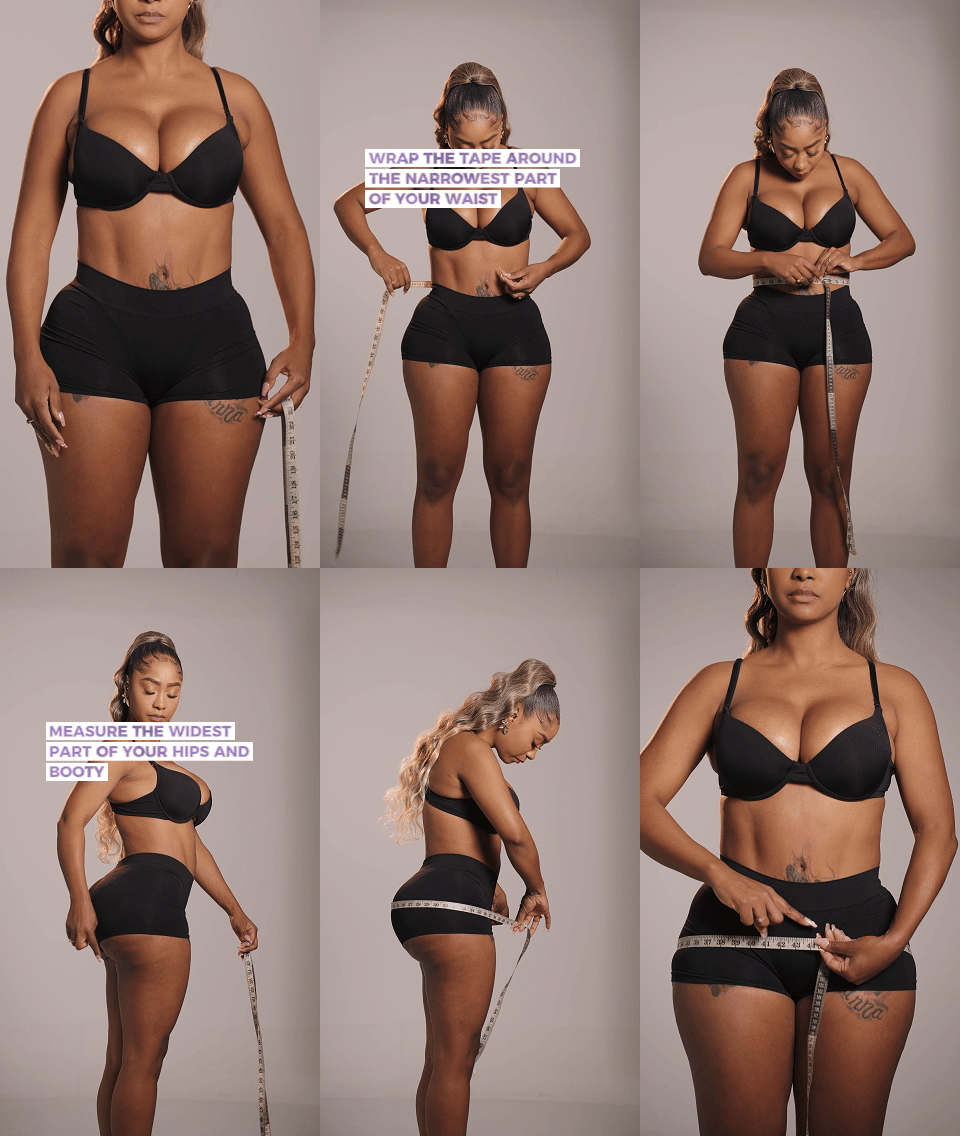
Step 4: Measure Correctly
Critical Measurements:
- Bust (under-bust for full body styles)
- Natural waist (most important)
- Lower waist/abdomen
- Hips (fullest part)
- Thigh (if style has leg coverage)
Use brand's specific size chart. "Medium" varies dramatically between brands.
Step 5: Set Realistic Expectations
Your First Faja Will:
- ✅ Feel VERY tight initially (this is normal)
- ✅ Require 3-5 days break-in period
- ✅ Need adjustment as your body adapts
- ✅ Provide immediate visual smoothing
- ✅ Improve posture noticeably
Your First Faja Won't:
- ❌ Make you "lose weight" (compression ≠ fat loss)
- ❌ Give instant permanent results (takes consistency)
- ❌ Feel comfortable day 1 (adaptation required)
- ❌ Replace healthy lifestyle (it's a tool, not magic)
Common Faja Myths Debunked
Myth #1: "Fajas Are Just Expensive Shapewear"
Reality: Medical-grade fajas provide 2-3X the compression of shapewear, using engineered materials and construction specifically designed for recovery or training. You're paying for actual engineering, not branding.
Myth #2: "You Can Damage Your Organs with Fajas"
Reality: Properly fitted fajas (15-40 mmHg) worn for recommended durations (8-12 hours max for daily wear, up to 23 hours for post-surgery) do not damage organs. Historical "tight-lacing" (Victorian era, extreme compression) could cause issues, but modern methodology is safe.
Myth #3: "Fajas Make You Lose Weight"
Reality: Fajas don't burn fat or cause weight loss. They may cause water weight loss (sweating), which returns when you hydrate. Real benefit: shape enhancement, smoother appearance, training effects (waist), recovery optimization (post-surgery).
Myth #4: "Only Post-Surgery Patients Need Fajas"
Reality: Post-surgery is one use case. Millions use fajas for waist training, daily confidence, posture support, or aesthetic enhancement without ever having surgery.
Myth #5: "All Fajas Are the Same"
Reality: Quality varies DRAMATICALLY. Cheap fajas (20−40)use inferior materials,lose compression quickly,and may not provide claim edmm Hg levels.Colombian medical−grade fajas(20-40)use inferior materials, lose compression quickly,and may not provide claim edmm Hglevels.Colombian medical−grade fajas(70-165) use certified materials, maintain compression for 200+ wears, and meet actual medical standards.
Myth #6: "You'll Become Dependent on Fajas"
Reality: Fajas don't weaken your muscles or make you "dependent." For post-surgery, you wear them temporarily during healing (12-16 weeks). For waist training, results are semi-permanent—maintained with occasional wear (not daily forever). For daily wear, it's preference, not necessity.
Caring for Your Faja
Washing:
- Hand wash in cool water
- Gentle soap (no harsh detergents)
- After every 2-3 wears
- Rinse completely
Drying:
- Air dry only (NEVER dryer—destroys elastic)
- Lay flat or hang
- 12-24 hours to fully dry
Storage:
- Hang or fold flat
- Keep clean (especially silicone areas)
- Cool, dry place
Lifespan:
- Post-surgery: 12-16 weeks of 23-hour daily wear
- Daily wear: 6-8 months
- Waist training: 12-18 months
- Signs to replace: rolling/riding (didn't before), visible wear, compression loss
The Snatched Body Difference: 25 Years of Colombian Mastery
Why Choose Snatched Body Fajas?
Authentic Colombian Engineering:
Manufactured in Colombia using 25 years of expertise from the plastic surgery capital of the world.
Medical-Grade Materials:
Certified compression fabrics, medical-grade silicone grips, surgical-quality construction.
Procedure-Specific Design:
Not generic. Each faja designed for specific use: BBL-safe open-butt, tummy tuck support, lipo compression zones.
Extended Sizing:
True inclusive sizing (2XS-5XL) with plus-specific engineering, not just "scaled up."
Quality Control:
Every faja tested for compression consistency, durability, and performance.
Proven Results:
Used by plastic surgeons worldwide, trusted by thousands of recovery patients, verified by consistent results.
Your First Faja: Quick Start Guide
If You're Post-Surgery:
- Confirm procedure with surgeon
- Ask: "What stage and compression level?"
- Measure 1-2 weeks before surgery
- Order Stage 1 + 2 fajas BEFORE surgery
- Have ready for day 1-2 post-op
Start: Post-Surgery Collection
If You're Waist Training:
- Take baseline waist measurement + photo
- Measure using size chart
- Order Stage 4 waist cincher
- Start 1-2 hours daily, build to 8-10 hours over weeks
- Track monthly progress
Start: Waist Training Cinchers
If You Want Daily Wear:
- Identify priority (comfort vs maximum compression)
- Choose style (full body, shorts, strapless, etc.)
- Order based on outfit needs
- Wear as desired (no strict schedule)
- Enjoy confidence boost
Start: Daily Wear Collection
Frequently Asked Questions
Is wearing a faja cultural appropriation?
No. Colombian fajas are medical/wellness tools, not sacred cultural items. Colombians share them globally because they work. Appreciation and use of quality Colombian engineering is welcomed. (Note: Respecting Colombian innovation by buying authentic fajas rather than cheap knockoffs IS important.)
Can men wear fajas?
Yes. Men use fajas for post-surgery recovery (gynecomastia, lipo), waist reduction, posture support, or core support. Some fajas are designed specifically for male bodies. Compression benefits aren't gender-specific.
Do I need a prescription to buy a faja?
No. Fajas are sold direct-to-consumer. However, for post-surgery use, follow your surgeon's specific recommendations on compression level, stage, and duration.
How long does it take to see results?
Post-surgery: Immediate (compression effect) + 3-6 months (final results as swelling resolves)
Waist training: First subtle changes 6-8 weeks, significant 3-6 months, maximum 12+ months
Daily wear: Immediate visual smoothing while wearing
Can I wear a faja if I haven't had surgery?
Absolutely. Millions use fajas without surgery for waist training, daily shaping, posture support, or confidence. Post-surgery fajas are ONE category; lifestyle fajas are equally valid.
What if my faja doesn't fit?
Exchange it. Proper fit is critical for effectiveness and comfort. Reputable brands (like Snatched Body) have exchange policies specifically for fit issues. Never struggle with wrong size—exchange until it's right.
The Bottom Line: Fajas Are Tools for Your Goals
A faja is a Colombian-engineered compression garment designed to:
- ✅ Optimize post-surgical recovery
- ✅ Train your waist smaller over time
- ✅ Smooth and shape for confidence
- ✅ Support your body during transformation
What it's NOT:
- ❌ Magic weight loss device
- ❌ Replacement for healthy lifestyle
- ❌ One-size-fits-all solution
- ❌ Instant results without effort
Understanding what fajas ARE and how they work is the first step to using them effectively for YOUR goals.
Whether you're recovering from surgery, training your waist, or seeking daily confidence—there's a faja designed for you.
👉 Explore All Faja Collections
👉 Find Your Perfect Faja - Size Guide
Now you know what fajas are. Time to experience what they can do for YOU.